Materials
Construction and compound choices are considered in relation to the intended tire duty.
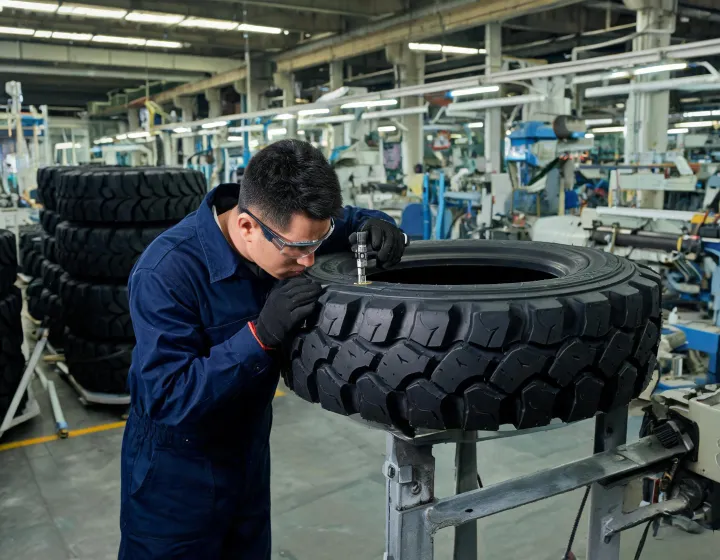
A clear sourcing conversation starts with the application, the product and the evidence needed to make a decision.
Construction and compound choices are considered in relation to the intended tire duty.
Manufacturing controls are relevant to consistent dimensions and the specification of each tire family.
Checks and records should be reviewed against the agreed product and acceptance criteria.
Inflation, loading, maintenance and road conditions affect performance throughout service.
Define the product family and vehicle application.
Share quantities and delivery locations.
Identify destination requirements before selection.
Agree which documents accompany the program.
Review the actual specification and applicable test information.
Ask for current documentation and the scope it covers.
Clarify how changes to an approved specification will be communicated.
Clarity. A useful request states what is known and marks what still needs to be verified. This helps avoid treating assumptions as approved specifications.
Accountability. Selection decisions should be supported by product-specific information, the intended duty cycle and the needs of the destination market.
Technical conversations benefit from a shared definition of the application. Vehicle type, tire position, route and loading establish the context for comparing specifications. A sourcing team can then identify which documents are needed and which questions remain open before a selection is approved.
Evidence should be reviewed for the actual product and market. A quality management system and a product regulation have different scopes, and neither should be assumed to apply without checking the relevant documentation. Changes to an application or destination can require a fresh review of the specification and its supporting evidence.